30 September 2026 · 4 min read
Why Doesn’t My Perfume Last Long? 10 Reasons Your Fragrance Fades Quickly
Why does perfume disappear so quickly? Discover 10 reasons your fragrance may fade and simple ways to make perfume last longer.
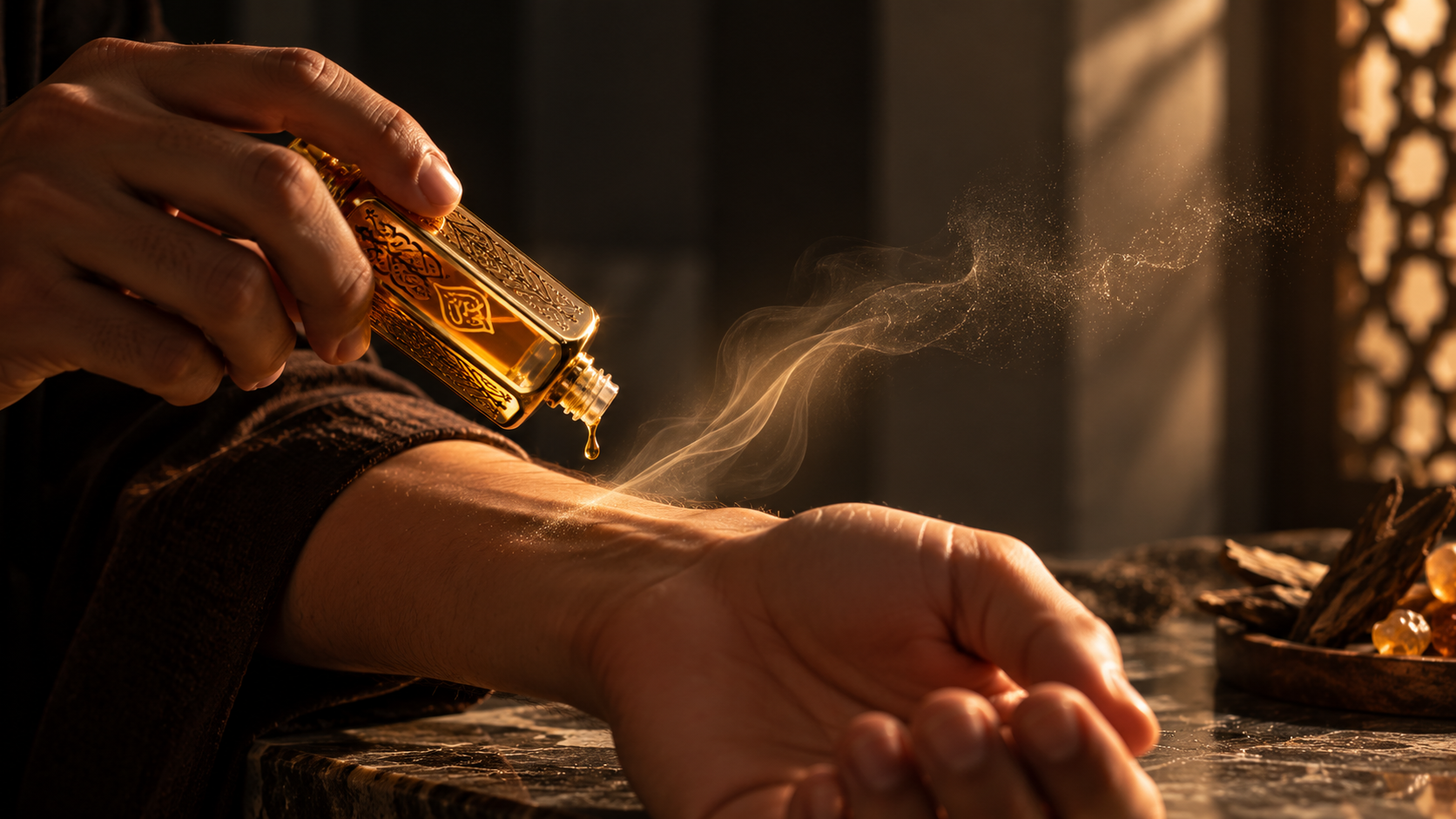
You apply your favourite fragrance in the morning.
It smells incredible.
Two hours later, you lift your wrist to your nose...
Nothing.
So what happened?
Did the perfume disappear? Is your skin "eating" fragrance? Did you simply not apply enough?
Maybe.
But there is another possibility:
Your perfume might still be there — your brain may have simply stopped paying attention to it.
Fragrance longevity is more complicated than most people realise. It depends on the ingredients, your skin, temperature, application method, fragrance composition and even how your brain processes smell.
Here are 10 reasons your perfume may seem to disappear too quickly.
1. You May Have Gone Nose Blind
This is one of the most misunderstood things in perfumery.
If you wear the same fragrance for several hours, your brain can gradually reduce its response to that continuous smell.
This is known as olfactory adaptation.
Your perfume hasn't necessarily disappeared.
You may simply have stopped noticing it.
This is why someone can walk past you and say:
"You smell amazing."
Meanwhile, you've been wondering where your perfume went for the last three hours.
Our sensory systems constantly filter information. If your brain treated every continuous smell as equally important all day, the world would become overwhelming.
So it begins paying less attention.
Before reapplying your perfume several times, ask someone else whether they can still smell it.
You might be surprised.
2. Your Fragrance Contains Very Volatile Materials
Not every fragrance ingredient evaporates at the same rate.
Some materials are highly volatile.
They enter the air quickly, which can make them smell bright and powerful at first — but they may also disappear relatively quickly.
This is common with many materials associated with:
- Citrus
- Fresh notes
- Light aromatics
- Some fruity effects
- Certain green notes
Other fragrance materials evaporate much more slowly.
These often contribute to the deeper character of a fragrance:
- Woods
- Musks
- Amber materials
- Resins
- Vanilla
- Patchouli
- Certain woody aroma molecules
This helps explain why a bright citrus fragrance and a heavy amber-woody fragrance may perform completely differently.
Longevity begins with the formula itself.
3. You Are Confusing Projection With Longevity
This is a huge one.
A perfume can stop projecting strongly without actually disappearing.
Projection describes how far a fragrance radiates from your body.
Longevity describes how long the fragrance remains detectable.
Sillage describes the scent trail you leave behind as you move.
Imagine a perfume that fills the room for its first hour.
After three hours, you can only smell it close to your skin.
After eight hours, a faint trace remains on your wrist.
Did it last one hour?
No.
It projected strongly for approximately one hour but remained detectable much longer.
This distinction is especially important with perfume oils.
Perfume oil can create a more intimate scent experience while remaining detectable close to the skin for a long time.
Quiet does not necessarily mean gone.
4. Your Skin May Be Very Dry
Your skin can influence the way fragrance behaves.
People with particularly dry skin sometimes find that fragrances do not seem to perform as well as expected.
One simple experiment is to moisturise before applying your perfume.
Use an unscented moisturiser, allow it to settle, then apply your fragrance.
Why unscented?
Because a strongly scented body lotion can interfere with the perfume you're trying to experience.
This isn't a magical trick that suddenly makes every perfume last 24 hours.
But if you have dry skin, it is worth testing.
5. You May Be Applying Too Little
With perfume oils especially, people sometimes become extremely cautious.
They apply the tiniest possible amount and then wonder why nobody can smell them.
Start conservatively — but learn your fragrance.
Some compositions require very little.
Others can comfortably handle more.
There isn't one universal rule such as "three drops is always enough."
The strength of the fragrance materials matters.
The concentration matters.
Your application area matters.
And your desired level of projection matters.
Learn the perfume instead of blindly following a number.
6. Where You Apply Perfume Matters
Fragrance is often applied to areas such as:
- Wrists
- Neck
- Behind the ears
- Inner elbows
- Collarbone
These areas are convenient and allow fragrance to warm naturally on the skin.
But there is another important consideration:
friction.
If you apply perfume to your wrist and then spend the entire day washing your hands, rubbing your sleeves against it and touching surfaces, some fragrance can physically be removed.
An area such as the neck may sometimes remain less disturbed throughout the day.
Experiment with different application points.
Your ideal location may not be somebody else's.
7. Heat Changes Fragrance Performance
Temperature has a major influence on fragrance.
Higher temperatures generally increase the volatility of aromatic materials.
That's one reason perfume can seem to bloom dramatically on warm skin.
But faster evaporation can also mean some volatile materials disappear more quickly.
Cold conditions can create the opposite impression.
A fragrance may feel quieter because its volatile materials are entering the air