24 October 2026 · 7 min read
Why Does Perfume Smell Metallic? The Science Behind Metal-Like Fragrance Notes
Why does perfume sometimes smell like metal or iron? Discover the chemistry of metallic fragrance notes and how perfumers recreate them.
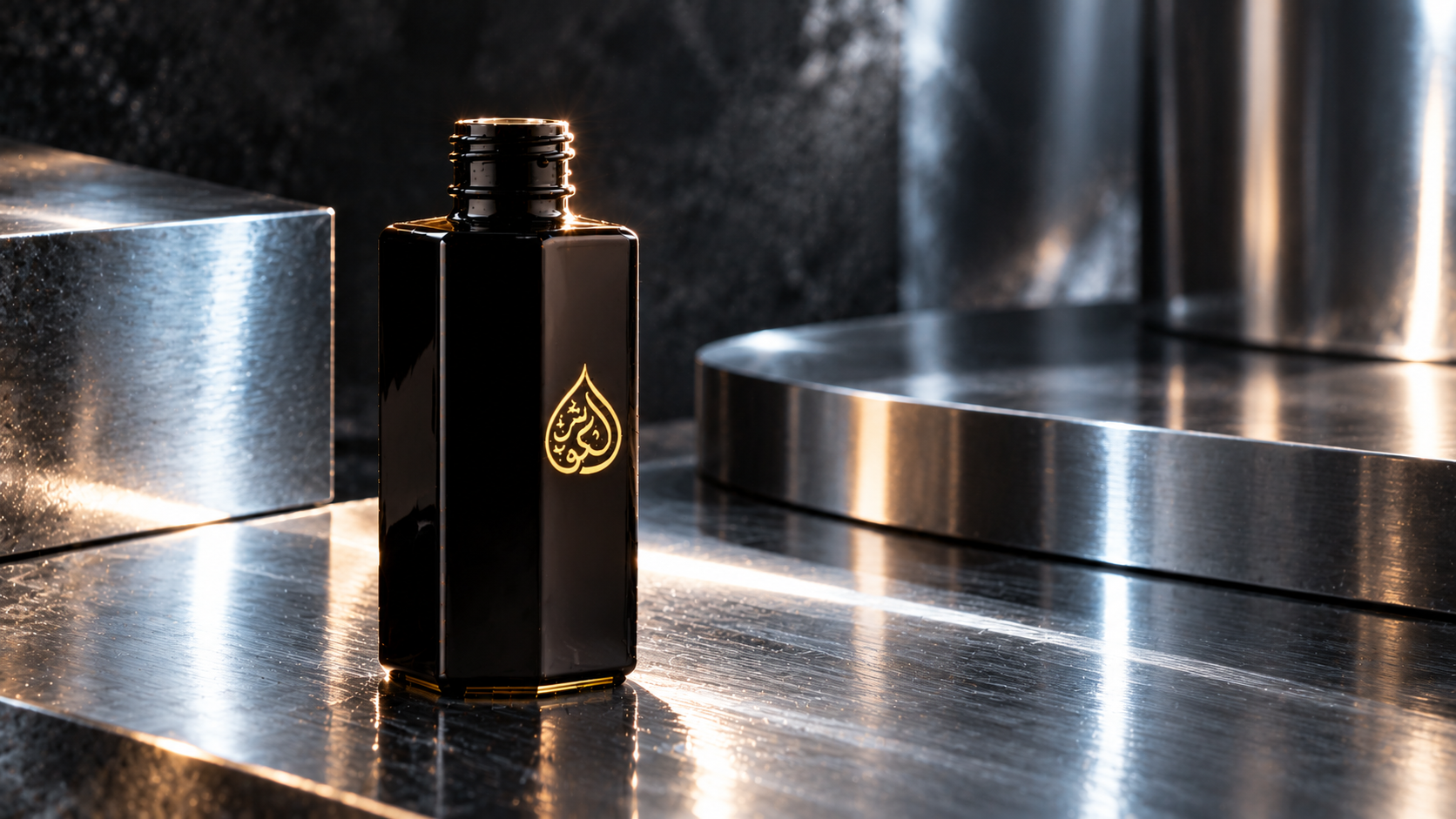
You apply a perfume and notice something unexpected.
It doesn't smell particularly floral, fruity or sweet.
Instead, there's a strange sharpness.
Something cold.
Almost electrical.
Perhaps it reminds you of metal, coins, steel or even the smell left on your hands after touching certain metallic objects.
But how can a perfume smell metallic when there isn't any metal in the bottle?
The answer takes us into one of the most unusual areas of fragrance chemistry.
What Does Metallic Mean in Perfumery?
When a perfume is described as metallic, it means that the fragrance creates an odour impression associated with metal or metal-like environments.
This can include associations such as:
- Cold steel
- Iron
- Coins
- Sharp mineral surfaces
- Electrical or ozonic impressions
- Blood-like metallic nuances
These descriptions are subjective.
Different people may interpret the same aromatic effect differently.
A metallic fragrance note doesn't necessarily mean that actual metal has been added to the perfume.
It describes the sensory impression created by the composition.
Does Metal Actually Have a Smell?
This is where things become particularly interesting.
Many solid metals have extremely low volatility under ordinary conditions.
That means they don't readily release large quantities of airborne metal atoms that we can smell.
Yet we often recognise a characteristic odour after handling coins, keys or iron objects.
Why?
Research has shown that some familiar metallic odours can arise from chemical reactions involving metal surfaces and substances on human skin.
In other words, the smell may come from newly formed organic compounds rather than from metal itself evaporating.
Why Do Coins Leave a Metallic Smell on Your Hands?
When certain metals come into contact with skin, they can participate in chemical reactions involving compounds present in skin oils.
These reactions can generate volatile organic molecules.
Some of those molecules produce characteristic metallic or mushroom-like odours.
One compound associated with this phenomenon is 1-octen-3-one.
This molecule can contribute to the distinctive smell people notice after touching iron-containing objects.
So the familiar metallic smell may be the result of chemistry occurring at the skin's surface.
You may not be smelling the metal itself. You may be smelling compounds formed through its interaction with your skin.
How Can Perfumers Recreate Metallic Notes?
Perfumers use aromatic materials to create impressions that remind us of familiar objects and environments.
This is the art of constructing an olfactory accord.
An accord is a combination of fragrance materials that work together to create a recognisable scent impression.
For a metallic effect, a perfumer may combine materials with sharp, mineral, aldehydic, green, ozonic or other characteristics.
The result may evoke polished steel, cold air or a metallic surface.
There is no single formula for every metallic fragrance.
Different perfumers can achieve related impressions through different combinations of materials.
What Is the Difference Between Metallic and Mineral Notes?
These terms can overlap, but they are not identical.
Metallic notes often suggest steel, iron, coins or sharp metal-like impressions.
Mineral notes may evoke stone, chalk, wet concrete, flint or other geological materials.
A perfume can contain both metallic and mineral effects.
For example, a composition might combine a cold metallic opening with a damp-stone impression.
Together, they can create a distinctive modern atmosphere.
However, these are descriptive fragrance categories rather than strict chemical classifications.
Why Do Some Floral Perfumes Smell Metallic?
Certain floral fragrance compositions can have sharp, green or metallic-like nuances.
A rose accord, for example, may be constructed in a way that emphasises fresh, sharp or unusual facets rather than only soft sweetness.
Some floral materials can also interact perceptually with aldehydes, green notes or other ingredients to create a cooler, more metallic impression.
This doesn't mean that the flower itself contains metal.
It means the aromatic composition evokes a metallic character.
Can Aldehydes Make Perfume Smell Metallic?
Some aldehydes can contribute sharp, bright or unusual effects that may support a metallic impression.
However, aldehydes are a large chemical family, and their odours vary considerably.
Some smell citrus-like.
Others smell waxy, fatty, green or floral.
So it would be incorrect to assume that every aldehyde smells metallic.
The effect depends on the specific material, its concentration and the other ingredients in the fragrance.
What Are Ozonic Notes?
Ozonic notes are fragrance effects that evoke fresh air, atmospheric sharpness or the impression of air after a storm.
These are often created using synthetic aroma molecules and carefully balanced accords.
Ozonic and metallic notes can sometimes share a cool, sharp character.
However, they are not identical.
An ozonic fragrance may remind you of fresh air or an open landscape.
A metallic fragrance may evoke cold steel or an industrial surface.
Perfumers can combine these impressions to create futuristic or atmospheric compositions.
Why Would Anyone Want a Perfume That Smells Like Metal?
Because perfumery is also a form of artistic expression.
Not every fragrance is designed to smell traditionally sweet, floral or woody.
Some compositions aim to recreate a particular atmosphere.
Imagine a perfume inspired by:
- A modern city at night
- Cold industrial architecture
- A polished steel surface
- A futuristic laboratory
- A rain-soaked urban landscape
- The sharpness of a metallic object
Metallic effects can contribute to these impressions.
When used carefully, they can create a fragrance that feels distinctive and contemporary.
Are Metallic Perfumes Dangerous?
A metallic smell does not automatically indicate danger.
A perfume can evoke metal without containing harmful amounts of metallic substances.
The safety of a fragrance depends on its actual ingredients, their concentrations, the finished formulation and how it is used.
However, if a familiar perfume suddenly develops an unusual smell that was not present before, that may warrant investigation.
Unexpected changes in odour, colour or texture can sometimes indicate deterioration or a formulation issue.
If a product has changed significantly, contact the manufacturer before continuing to use it.
Why Does Perfume Sometimes Smell Metallic on One Person but Not Another?
There are several possible explanations.
People differ in how they perceive odours.
Their prior experiences and learned associations can influence how they describe a fragrance.
The amount applied, the environment and the fragrance's development over time may also affect what becomes noticeable.
Additionally, skin products and other substances present on the skin can influence the overall scent experience.
However, the idea that every metallic impression results from a unique chemical reaction with someone's skin is an oversimplification.
Sometimes the metallic characteristic is already part of the fragrance itself.
Does a Metallic Smell Mean the Perfume Has Gone Bad?
Not necessarily.
Some perfumes are deliberately formulated to have metallic effects.
If the fragrance has always smelled that way, it may simply be part of its design.
But if a perfume that previously smelled normal suddenly develops an unexpected sharp, metallic or otherwise unusual odour, consider its condition.
Potential causes may include ingredient changes, packaging interactions or storage-related deterioration.
The smell alone cannot identify the exact cause.
Are Metallic Notes Natural or Synthetic?
Metallic effects can be created using different types of aromatic materials.
Modern perfumery frequently uses synthetic aroma molecules because they allow perfumers to construct precise and unusual scent impressions.
However, certain natural materials can also contain facets that people describe as metallic, mineral or sharp.
The natural-versus-synthetic distinction doesn't determine whether a fragrance is high quality.
What matters is how the materials are used and how the finished composition performs.
How Should You Test a Metallic Fragrance?
If you're exploring metallic notes for the first time, begin by smelling the fragrance on a blotter.
Pay attention to the opening.
Does it remind you of coins, cold air, sharp greenery or something mineral?
Then allow the fragrance to develop.
You may discover that the metallic effect becomes softer as floral, woody or musky notes emerge.
If you enjoy the fragrance on paper, you can test it on a small area of suitable skin, following the product instructions.
Remember that unusual fragrance notes may take time to appreciate.
But there's no obligation to enjoy them.
Fragrance remains personal.
The Relationship Between Metal, Memory and Smell
One of the most fascinating aspects of metallic fragrances is how strongly they can evoke familiar experiences.
The smell of coins may remind someone of childhood.
A cold, mineral accord may evoke a rainy city.
A sharp metallic note may remind another person of a workshop or industrial environment.
Our brains connect odours with experiences.
This is why a fragrance can recreate an atmosphere without physically containing the objects associated with it.
The Bottom Line
Why does perfume sometimes smell metallic?
Because aromatic materials can create impressions associated with iron, steel, coins or other metallic environments.
And the familiar smell we associate with certain metals may itself come from chemical reactions involving metal surfaces and skin compounds.
Perfumers can recreate similar impressions through carefully constructed fragrance accords.
At Al Kowthar Fragrances, we believe the art of perfumery becomes more interesting when you understand the science behind unexpected smells.
A fragrance doesn't always need to smell like flowers, fruits or woods.
Sometimes it can evoke an object, a place or a memory.
And sometimes, a perfume can make you imagine the cold surface of steel without a single piece of steel being present.
"Explore Al Kowthar Fragrances" (https://alkowtharfragrance.com/shop)