1 October 2026 · 7 min read
Why Can’t I Smell My Own Perfume? Nose Blindness Explained
Can’t smell your perfume anymore? Your fragrance may still be there. Discover nose blindness and why your brain stops noticing familiar scents.
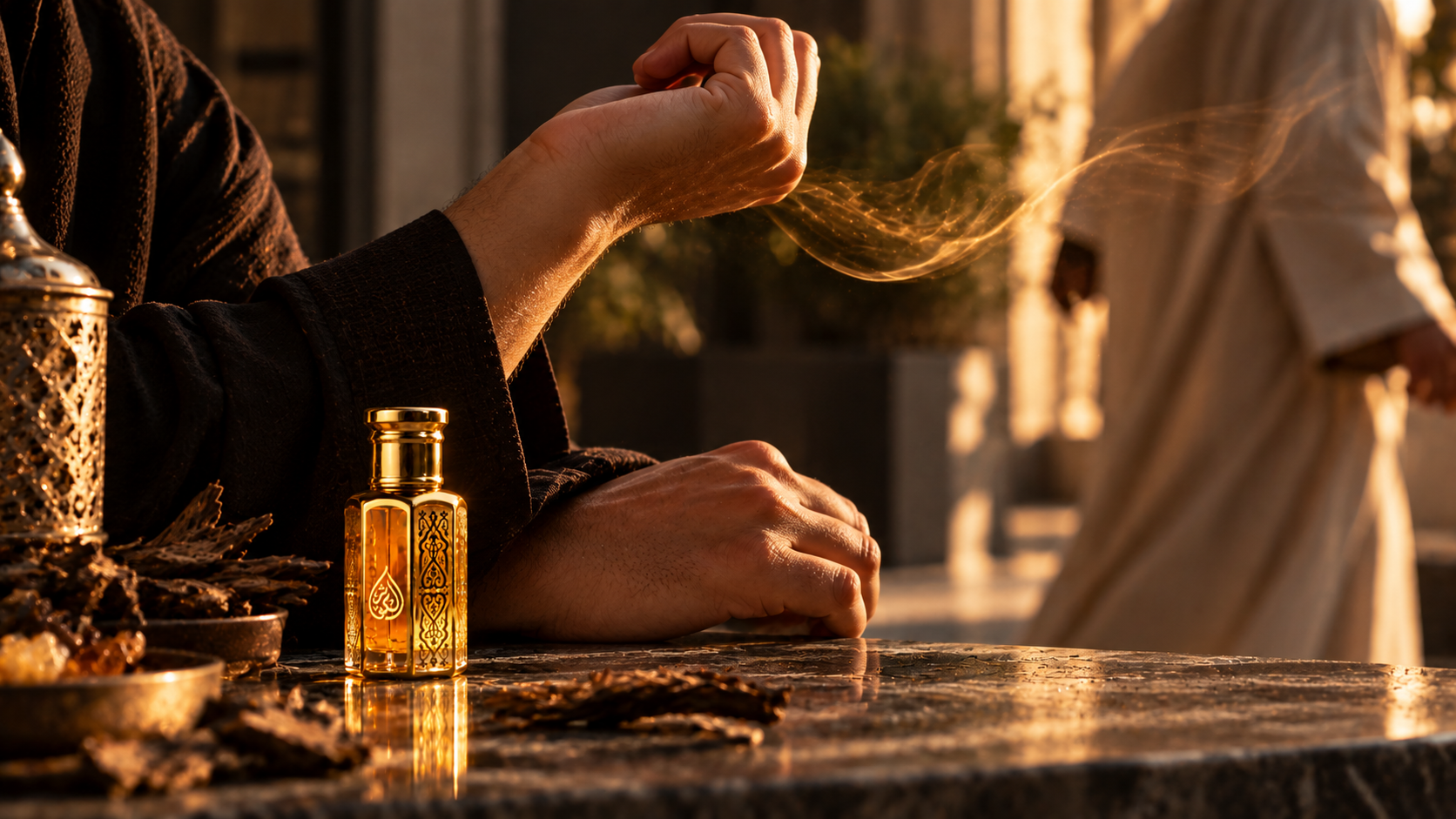
You apply your perfume in the morning.
For the first few minutes, it smells incredible.
An hour later, you barely notice it.
So you apply more.
Then somebody walks past you and says:
“Wow, your perfume is strong.”
How can they smell it when you can't?
Your perfume may not have disappeared at all.
Your brain may simply have stopped paying attention to it.
This phenomenon is commonly called nose blindness, and understanding it can completely change the way you wear fragrance.
What Is Nose Blindness?
Nose blindness is an everyday term commonly used to describe olfactory adaptation.
When your nose is continuously exposed to the same smell, your perception of that smell can decrease over time.
The fragrance hasn't necessarily vanished.
Instead, your sensory system has become less responsive to a smell that has remained present.
Think about walking into a room with a noticeable smell.
You immediately notice it.
After sitting in the room for a while, however, you may barely notice it anymore.
Then somebody new enters the room and immediately detects the smell.
The environment didn't suddenly change.
Your perception did.
Something similar can happen with perfume.
Why Does Your Brain Stop Noticing Your Perfume?
Your senses are constantly receiving enormous amounts of information.
Sounds.
Light.
Temperature.
Touch.
Smells.
Your brain has to decide what deserves attention.
A new smell can be important.
Smoke might indicate danger.
Food aromas might indicate something worth eating.
An unfamiliar smell may require investigation.
But once a smell remains continuously present without changing, your sensory system can gradually become less responsive to it.
Your perfume is especially vulnerable to this effect because it literally travels with you.
You cannot walk away from your own neck.
So while another person encounters your fragrance as something new when they approach you, you may have been surrounded by it for hours.
Does Nose Blindness Mean Your Perfume Is Still Strong?
Not necessarily.
This distinction is important.
Sometimes you can't smell your perfume because you've adapted to it.
Other times, the fragrance really has become weaker because some of its more volatile materials have evaporated.
And sometimes both things are happening simultaneously.
Perfume naturally changes throughout the day.
Its projection may decrease.
Its composition may move further into the drydown.
And your own sensitivity to the fragrance may also decrease.
So nose blindness should not become an explanation for every perfume that performs poorly.
The challenge is working out which situation you're experiencing.
How Can You Tell If You're Nose Blind?
One of the easiest tests requires no equipment.
Ask somebody else.
If you stopped noticing your perfume two hours ago but someone standing near you can clearly smell it, that is a strong indication that the fragrance is still detectable.
Another useful approach is to avoid constantly smelling the application point.
If you repeatedly lift your wrist to your nose every few minutes, you're continually exposing yourself to the fragrance at close range.
Instead, wear it normally and allow yourself to encounter it naturally throughout the day.
You may suddenly notice little waves of fragrance again.
Why Can Other People Smell Your Perfume When You Can't?
Because they haven't been continuously exposed to it.
Imagine you've been wearing the same fragrance for four hours.
Your sensory system has had four hours to become familiar with that smell.
Then you walk past somebody.
For them, the fragrance is new.
They may immediately notice something that your own brain has largely pushed into the background.
This creates one of the strangest experiences in perfumery:
You think your fragrance has disappeared while everyone around you can still smell it.
Does This Lead People to Overspray?
It certainly can.
The cycle often looks like this:
You apply perfume.
You stop noticing it.
You assume it has disappeared.
You apply more.
Your brain adapts again.
You apply even more.
Meanwhile, everyone around you is experiencing a much stronger fragrance than you realise.
This is why constantly judging your fragrance by putting your wrist directly underneath your nose isn't always reliable.
Your own nose is part of the experiment.
Should You Keep Smelling Your Wrist?
You can, of course.
But repeatedly pressing your nose close to your wrist isn't necessarily the best way to judge how other people experience your fragrance.
Other people normally aren't smelling your skin from two centimetres away.
They encounter the fragrance in the air around you.
Instead of constantly checking your wrist, pay attention to moments when you naturally notice the fragrance while moving.
A turn of your head.
Movement of your clothing.
A change in temperature.
Walking outside and then returning indoors.
These little moments can reveal that your fragrance is still very much present.
Can You Become Nose Blind to One Particular Perfume?
You may notice some familiar fragrances less readily after repeated exposure.
This is especially interesting if you wear the same perfume every single day.
The scent becomes extremely familiar.
Then you switch to a completely different fragrance and suddenly think:
“This one is much stronger.”
Maybe it is.
But novelty can also influence how noticeable a fragrance feels to you.
This is one reason personal perception alone shouldn't always be used to compare fragrance performance.
Does Nose Blindness Mean You Should Rotate Fragrances?
You don't have to.
If you love one fragrance, wear it.
But rotating fragrances can change your sensory experience simply because you're introducing different scent profiles.
You might wear something woody one day, something fresh another day and something sweet later in the week.
Each gives your nose a different aromatic environment.
More importantly, don't chase your perfume all day by continuously applying more simply because you stop noticing it.
Is Nose Blindness the Same as a Weak Perfume?
No.
A weak-performing fragrance and olfactory adaptation are different things.
A fragrance may genuinely have low projection.
A perfume may genuinely fade quickly.
Its lighter materials may evaporate rapidly.
Your skin and environment may influence its performance.
Or you may simply have adapted to the smell.
Sometimes several of these factors occur together.
This is why perfume performance is much more complicated than:
“I can't smell it, therefore it's gone.”
Projection and Longevity Are Different
This is another important part of the puzzle.
Projection is how far a fragrance radiates from you.
Longevity is how long it remains detectable.
Sillage describes the scent trail that remains as you move.
A perfume can stop projecting strongly while remaining detectable close to your skin for many more hours.
That doesn't necessarily mean you've gone nose blind.
The fragrance may simply have entered a quieter stage of its development.
Perfume oils are particularly interesting in this respect because they can create a more intimate scent experience than highly diffusive sprays.
A fragrance doesn't need to fill an entire room to still be present.
How Can You Reduce Nose Blindness?
You cannot completely prevent normal sensory adaptation.
And you don't need to.
It is part of how your sensory system works.
But you can judge your fragrance more intelligently.
Try these simple habits:
- Don't constantly smell your wrist
- Avoid immediately reapplying when you stop noticing your fragrance
- Ask someone else whether they can still smell it
- Pay attention to fragrance when you naturally move through different environments
- Learn how your perfume behaves several hours after application
- Understand the difference between projection and longevity
- Occasionally rotate fragrances if you enjoy different scent profiles
Most importantly:
Don't assume silence means disappearance.
Your Nose Isn't a Perfect Measuring Instrument
Perfume is chemistry.
But experiencing perfume is biology.
The fragrance molecules entering the air are only half the story.
Your nose detects them.
Your nervous system processes them.
Your brain decides how much attention to give them.
That's why two people can experience the same fragrance differently.
And it's why your own perception of your perfume can change throughout the day.
The Next Time Your Perfume “Disappears”...
Don't immediately reach for the bottle.
Wait.
Move around.
Leave the room.
Ask someone else.
Then see whether the fragrance has genuinely disappeared or whether your brain has simply become familiar with it.
You might discover something surprising:
The person who smells your perfume the least may sometimes be you.
Understanding Fragrance Changes How You Wear It
At Al Kowthar Fragrances, we don't just want fragrance to smell beautiful.
We want people to understand what they're smelling.
From evaporation and molecular volatility to projection, skin chemistry and the extraordinary way our brains process scent, there is an entire world hidden inside every bottle.
And once you begin understanding that world, perfume becomes far more fascinating.