7 October 2026 · 6 min read
Why Are Oud, Rose & Saffron So Important in Middle Eastern Perfumery?
Discover why oud, rose and saffron have become iconic in Middle Eastern perfumery, and how these precious materials shaped fragrance traditions.
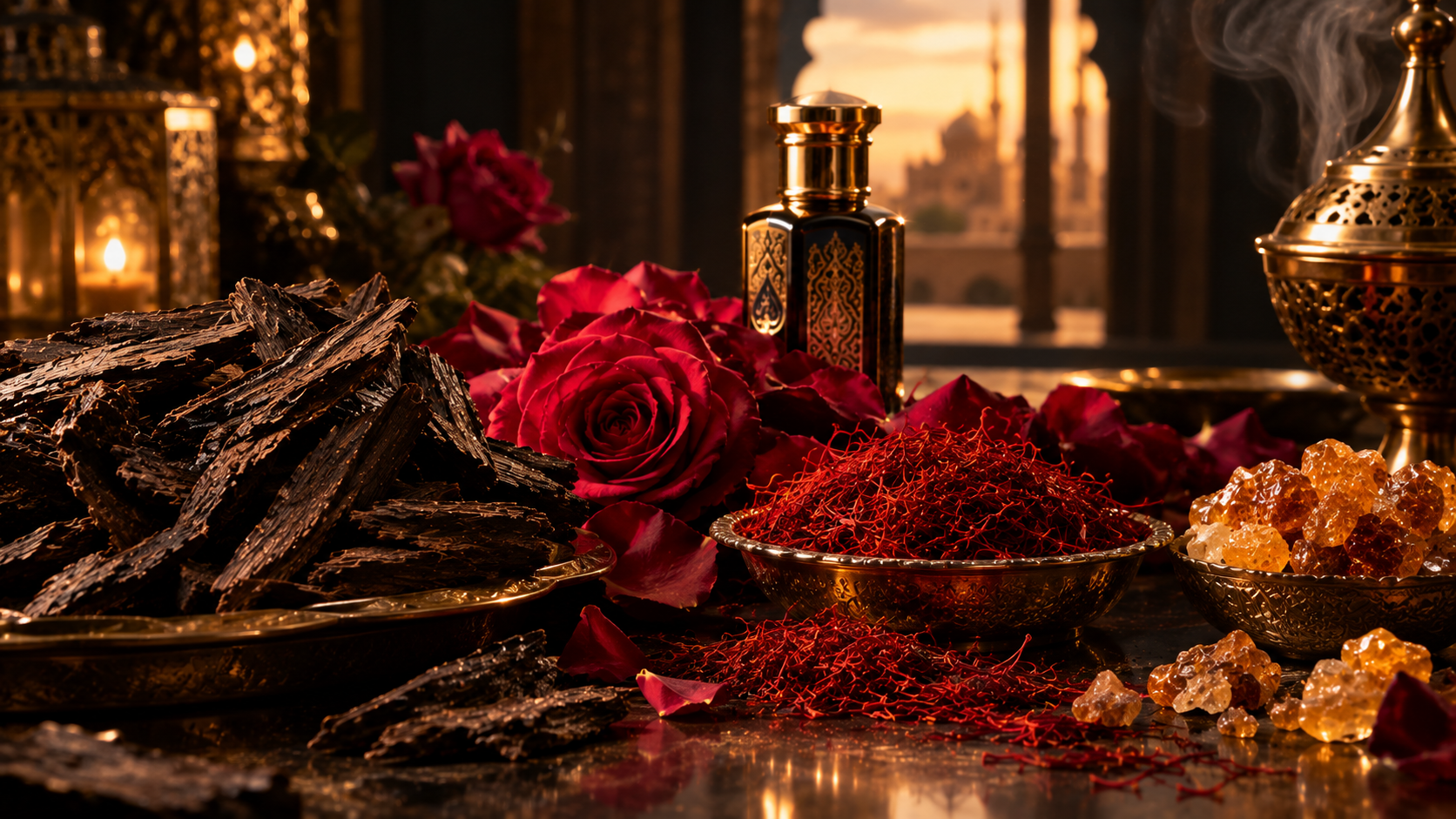
Few ingredients are as closely associated with Middle Eastern perfumery as oud, rose and saffron.
You will find them in traditional attars, perfume oils, incense and modern fragrances across the region.
But why these three?
What made them so important?
And why do they continue to appear in modern perfumery centuries after their use became established?
The answer is a combination of culture, history, craftsmanship, rarity and the extraordinary character of the materials themselves.
Oud, Rose & Saffron: Three Very Different Materials
Before understanding their importance, it helps to understand how different they actually are.
Oud comes from resinous agarwood.
Rose comes from a flower.
Saffron comes from the delicate red stigmas of the saffron crocus.
One is woody and resinous.
One is floral.
One is spicy, warm and distinctive.
Yet together, they can create an incredibly sophisticated fragrance profile.
That contrast is part of their appeal.
Why Is Oud So Important?
Oud, often associated with agarwood and its aromatic resin, has a particularly important place in Middle Eastern fragrance culture.
Its aroma can be deep, woody, smoky, resinous, sweet, earthy or animalic depending on the material and how it has been processed.
There isn't one single "oud smell."
Different origins, species, resin characteristics and production methods can produce remarkably different oils.
This complexity is one reason oud has become such an important fragrance material.
But its importance isn't only about smell.
Oud is also connected to a long tradition of perfumery, incense and hospitality across parts of the Middle East and Asia.
Burning fragrant woods and incense has historically been part of creating an inviting atmosphere.
Oud oil, meanwhile, offers another way of wearing that distinctive material directly on the skin.
Why Is Oud Considered Luxurious?
Part of oud's reputation comes from the rarity and complexity of high-quality agarwood.
The fragrant resin develops inside certain trees as part of their response to injury and microbial activity.
Not every piece of wood develops the same level of resin.
Highly resinous material can therefore be extremely valuable.
The process of turning suitable agarwood into oud oil can also be lengthy and require considerable expertise.
The result is a material where origin, quality, processing and craftsmanship can all influence the final fragrance.
That makes oud much more than simply "a strong woody note."
Rose: The Floral Counterpoint
If oud represents depth, rose often brings brightness, softness and floral elegance.
Rose has been used in perfumery for centuries across multiple cultures.
Its importance in Middle Eastern fragrance traditions is particularly interesting because rose can be used in several different forms.
Rose water.
Rose petals.
Rose extracts.
Rose oils.
And rose-inspired fragrance compositions.
The smell of rose can range from fresh and green to sweet, rich, spicy or almost honeyed depending on the variety, extraction and composition.
Why Does Rose Work So Well With Oud?
Oud and rose might seem like opposites.
Oud can be dark, woody and powerful.
Rose can be delicate, floral and bright.
But opposites can create balance.
Rose can lift the darker character of oud.
Oud can give the floral character greater depth.
Instead of competing, the two can create contrast.
This is one reason rose and oud became such a recognisable combination in Middle Eastern-inspired perfumery.
The result can feel simultaneously floral, woody, warm and luxurious.
And Then There Is Saffron
Saffron is another ingredient with a remarkable history.
It comes from the red stigmas of the Crocus sativus flower.
Each flower produces only a small number of usable stigmas, and harvesting them is labour-intensive.
The result is one of the world's most valuable spices.
But saffron's value isn't only culinary.
Its distinctive aromatic character also makes it fascinating in perfumery.
What Does Saffron Smell Like?
Saffron can be difficult to describe with a single word.
Depending on the material and formulation, it can contribute:
- Warmth
- Spice
- Dryness
- Sweetness
- Leather-like nuances
- Earthiness
- A slightly metallic character
This complexity makes saffron extremely useful in fragrance composition.
A small amount can change the personality of an entire perfume.
Why Is Saffron Used With Oud?
Saffron and oud can create an intense contrast.
The warm, spicy character of saffron can sit beautifully against the darker woody depth of oud.
It can also add brightness and texture to an otherwise heavy composition.
This is particularly effective when combined with other materials such as rose, amber, musk or woods.
The result can feel rich without simply being "sweet."
The Three Together
Now imagine:
Oud — deep, woody and resinous.
Rose — floral, elegant and expressive.
Saffron — warm, spicy and distinctive.
Together, these materials create three different dimensions.
Depth.
Floral character.
Spice.
That's why the combination can be so compelling.
It isn't simply three expensive ingredients placed into a bottle.
It's about contrast and balance.
Why Are These Ingredients Associated With Luxury?
There is an important distinction here.
An ingredient being expensive does not automatically make a perfume luxurious.
Luxury in fragrance can come from:
- Quality of raw materials
- Craftsmanship
- Complexity
- Rarity
- Balance
- Presentation
- Cultural heritage
- The experience created by the fragrance
Oud, rose and saffron have all developed strong luxury associations partly because of their histories and the effort required to obtain certain high-quality forms.
But a good perfumer still has to use them well.
More expensive materials do not automatically create a better perfume.
Middle Eastern Perfumery Is More Than These Three Ingredients
It's also important not to reduce Middle Eastern perfumery to oud, rose and saffron.
The region has an enormous fragrance tradition involving materials such as:
- Musk
- Amber
- Sandalwood
- Frankincense
- Myrrh
- Various flowers
- Spices
- Resins
- Citrus
- Herbs
- Incense materials
Different countries, communities and perfumers have developed their own preferences and traditions.
So oud, rose and saffron are important symbols of the fragrance world, but they are only part of a much larger story.
Why Are Oils So Important?
Oil-based fragrance has a particularly strong connection with traditional fragrance practices across the Middle East and South Asia.
Instead of spraying a fragrance into the air, concentrated aromatic materials can be applied directly to the skin.
This creates a more intimate way of experiencing ingredients such as oud, rose and musk.
The wearer can experience the fragrance gradually as it develops.
And because many traditional aromatic materials are complex, that development can be fascinating.
Fragrance Is Also Part of Hospitality
Fragrance in Middle Eastern culture has historically been connected not only to personal adornment but also to hospitality and the atmosphere of a home or gathering.
Incense and fragrant materials can be used to create a welcoming environment.
Perfume can be offered to guests.
Fragrance can accompany important occasions.
This gives perfume a meaning beyond simply smelling pleasant.
It can become part of how people welcome, celebrate and remember.
Why These Materials Still Matter Today
Modern perfumery has access to thousands of aroma materials that previous generations of perfumers could never have imagined.
Yet oud, rose and saffron remain highly relevant.
Why?
Because technology doesn't eliminate the appeal of heritage.
A modern perfumer can combine contemporary aroma molecules with traditional materials and create something completely new while still drawing from centuries of fragrance culture.
That's one of the most exciting things about modern perfumery.
Tradition and innovation don't have to compete.
They can work together.
The Real Beauty Is in the Blend
Perhaps the biggest lesson from oud, rose and saffron is that great perfumery isn't simply about collecting beautiful ingredients.
It's about knowing how they interact.
Oud can provide depth.
Rose can provide lift and floral richness.
Saffron can provide warmth and texture.
Another material might soften them.
Another might increase diffusion.
Another might extend the drydown.
The perfumer's job is to bring everything into balance.
A Fragrance Can Carry a Culture
When you smell an oud, rose and saffron fragrance, you're experiencing more than a collection of aromatic molecules.
You're encountering materials with histories that stretch across regions, generations and traditions.
That's one reason fragrance is so powerful.
A bottle can contain chemistry.
But it can also contain craftsmanship, memory, culture and history.
At Al Kowthar Fragrances, we believe understanding that story makes the fragrance itself even more meaningful.
The next time you smell oud, rose or saffron, don't simply ask:
"Does this smell good?"
Ask:
"Why has this material mattered for so long?"
Sometimes the answer is where the real beauty begins.