12 October 2026 · 6 min read
Can Water Ruin Perfume Oil? What Happens When Moisture Gets Inside?
Can water damage perfume oil? Discover what happens when moisture enters your fragrance, why separation occurs and how to protect your perfume.
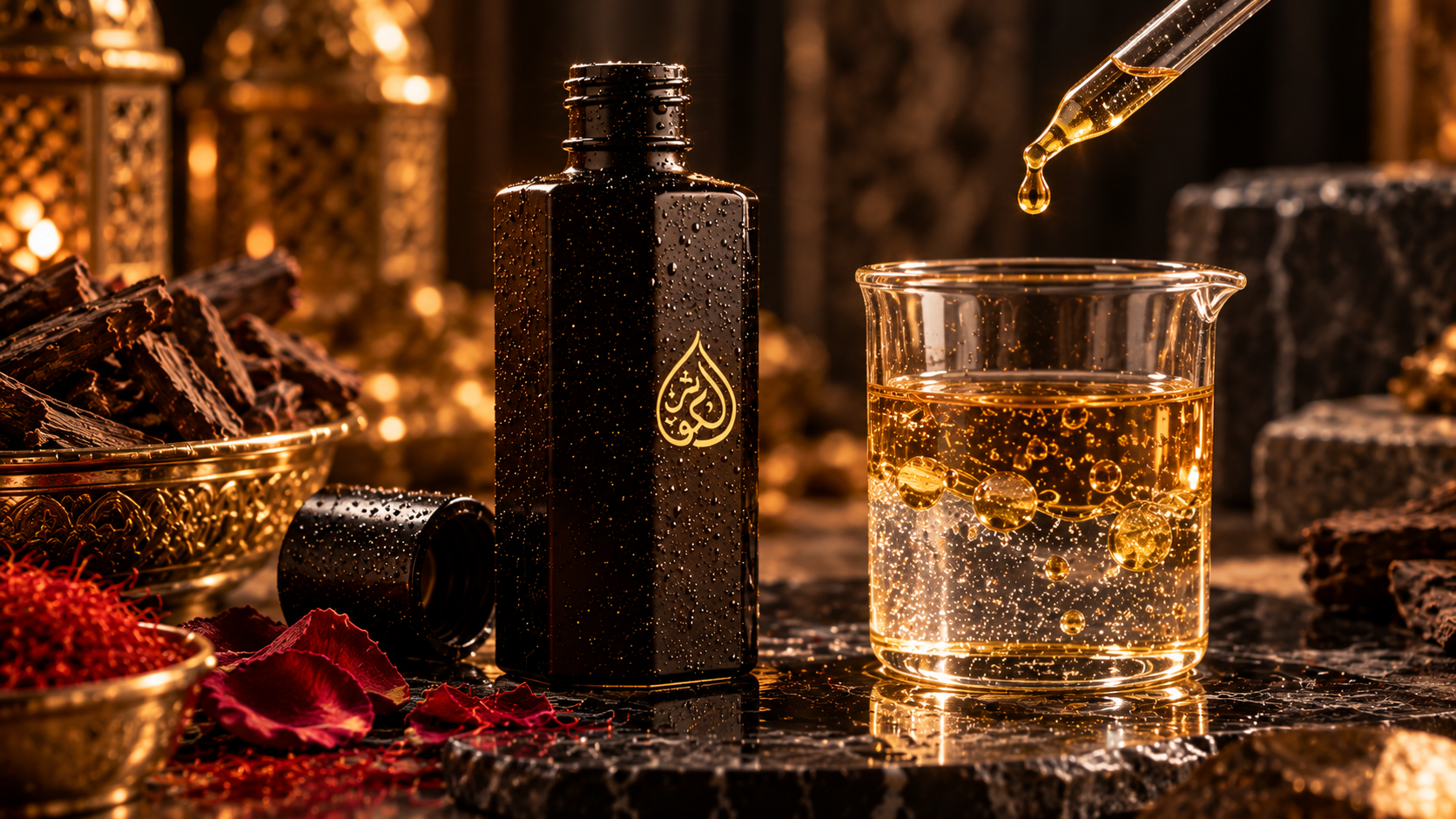
Imagine opening your favourite perfume oil and noticing something unusual.
The liquid looks cloudy.
Tiny droplets have appeared inside the bottle.
Or perhaps the fragrance no longer looks as clear as it did when you first purchased it.
You begin to wonder:
Has water somehow entered my perfume? And if it has, is the fragrance ruined?
It's a question worth understanding because water and oil-based fragrances don't always behave the way people expect.
Let's explore the science behind what happens when moisture enters perfume oil.
Can Water Actually Ruin Perfume Oil?
Yes, unwanted water contamination can affect perfume oil, but a tiny amount of moisture does not automatically mean the fragrance is ruined.
The outcome depends on several factors:
- The perfume's formulation
- The amount of water introduced
- The ingredients and solvents present
- Whether the water contains contaminants
- How the product is stored
- Whether the formula is designed to contain water
A properly formulated product may tolerate a certain amount of moisture, while another may become cloudy, separate or unstable.
The important distinction is between water intentionally included in a tested formula and water accidentally introduced after production.
Why Don't Oil and Water Mix Easily?
To understand what happens inside the bottle, we need a little chemistry.
Water is a highly polar liquid.
Many oils consist largely of nonpolar molecules.
Because their molecular properties differ, they generally don't mix readily.
You can see this in everyday life when you pour cooking oil into a glass of water.
The two liquids separate.
Perfume oil can behave similarly, although fragrance formulations are more complicated than a simple mixture of cooking oil and water.
Some fragrance ingredients are partially soluble in water. Others are not.
Certain solvents can also help different materials remain mixed.
That means the result depends on the exact formula.
What Happens When Water Gets Inside a Perfume Oil Bottle?
Several things may happen.
1. The perfume may become cloudy
Tiny droplets of water can become dispersed throughout an oil-based liquid.
These droplets scatter light, sometimes making the liquid appear hazy or milky.
This is one possible reason for cloudiness, but it isn't the only explanation.
Temperature changes, ingredient precipitation and formulation instability can also produce a cloudy appearance.
2. Separate layers may form
If the water and fragrance base are incompatible, they may gradually separate.
You might notice a visible boundary between two liquid layers or small droplets collecting in one area.
Shaking the bottle may temporarily disperse the water, but that doesn't necessarily create a stable mixture.
3. The fragrance may behave differently
If water changes the physical balance of the formulation, it may influence how some aromatic ingredients are distributed or released.
However, water contamination does not always produce an immediate, noticeable change in smell.
A perfume can look different while still smelling familiar.
Equally, an unchanged appearance does not guarantee that a contaminated product is suitable to use.
Can Water Make Perfume Oil Smell Bad?
Potentially, but not always.
Pure water does not automatically destroy fragrance molecules.
However, introducing unwanted water can alter the formulation environment.
Depending on the ingredients and storage conditions, some materials may undergo chemical changes over time.
If the water contains microorganisms or other contaminants, additional problems may arise.
A noticeable change in smell can be a warning sign.
For example, a fragrance that develops an unexpected sour, stale or otherwise unusual odour deserves attention.
But remember:
Smell alone cannot reliably establish whether a product is contaminated or safe.
Can Bacteria Grow in Perfume Oil?
This is an important question.
Microorganisms generally require suitable conditions to grow, including access to water.
Many anhydrous, or water-free, formulations provide an unfavourable environment for microbial growth.
But accidentally introducing water can create localised areas where conditions are different.
Whether microbial growth is possible depends on the formulation, the amount and availability of water, contamination levels and other factors.
A product that contains water intentionally should be designed and tested with microbial safety in mind.
This is why accidentally adding water to a finished fragrance is not a good idea.
How Does Water Accidentally Enter Perfume Oil?
It can happen in several ways.
Wet applicators
An applicator that comes into contact with water and is returned to the bottle may introduce moisture.
Wet hands
Handling an open bottle or applicator with wet hands can create an opportunity for droplets to enter.
Improperly closed bottles
A loose cap can increase exposure to the surrounding environment and make accidental contamination more likely.
Refilling or transferring perfume
Using equipment or containers that have not been properly cleaned and dried may introduce water or other contaminants.
Bathroom storage
Bathrooms often experience high humidity and frequent temperature changes. A properly sealed bottle should resist ordinary ambient moisture, but leaving it open or exposing its contents directly to water increases the risk.
Can You Fix Perfume Oil That Has Water Inside?
There is no universal home solution.
You may be tempted to shake the bottle, heat it or try to separate the liquids yourself.
However, these approaches can create additional problems.
Shaking may temporarily disperse droplets without removing contamination.
Heating can accelerate unwanted chemical changes and may damage the fragrance.
Trying to remove water using household methods can introduce even more contaminants.
If you suspect significant water contamination, the safest approach is to stop using the product and contact the manufacturer or seller.
For a product that has visibly separated or changed unexpectedly, replacement may be more appropriate than attempting to repair it.
Is Cloudy Perfume Always Contaminated?
No.
This is a common misunderstanding.
Cloudiness can result from several causes, including:
- Temperature-related changes
- Ingredient solubility
- Precipitation of certain materials
- Air bubbles
- Water contamination
- Formulation instability
Some fragrance products are intentionally cloudy or opaque.
Others may temporarily become hazy under colder conditions.
So cloudiness is a reason to investigate, not proof of one specific problem.
How Can You Protect Perfume Oil From Moisture?
A few simple habits can help.
Keep the bottle properly closed
Close your fragrance immediately after use.
This reduces unnecessary exposure to the surrounding environment.
Keep applicators clean and dry
Avoid returning a wet or visibly dirty applicator to the bottle.
Avoid storing open bottles near water
Be especially careful around sinks, showers and other places where splashes may occur.
Use suitable equipment when transferring perfume
If you refill or decant fragrances, use containers and tools that are appropriately clean, dry and compatible with the product.
Store perfume somewhere cool and dry
A closed cupboard or drawer away from direct sunlight and excessive heat is often a good choice.
Does Water Affect Perfume Oil Longevity?
It can affect the formulation, but there is no simple rule that adding water always makes a perfume last a particular amount less.
Fragrance longevity depends on the aromatic materials, the delivery system, the application amount and environmental conditions.
If water causes separation or instability, the product may no longer behave as intended.
However, you cannot reliably judge the extent of that change simply by looking at the bottle.
What Should You Do If Water Gets Into Your Perfume?
If you know water has entered the bottle, particularly from a sink, wet applicator or another uncontrolled source, avoid using it until the manufacturer has advised you.
Don't assume the product is safe just because it still smells pleasant.
And don't attempt to fix it by adding alcohol, solvents or other ingredients.
The original fragrance was formulated as a complete product.
Changing its composition at home can create unpredictable results.
The Bottom Line
Water and perfume oil are not automatically compatible.
Accidental moisture contamination can cause cloudiness, separation, formulation changes and, under suitable conditions, microbial concerns.
But not every cloudy perfume contains water, and not every small exposure immediately destroys a fragrance.
The most important lesson is simple:
Protect the integrity of the formula.
At Al Kowthar Fragrances, we believe caring for perfume is part of appreciating the craftsmanship behind it.
A beautiful fragrance deserves more than careful application.
It deserves careful handling, storage and protection.
Because the better you understand what is inside your bottle, the better you can preserve the experience it was created to deliver.
"Explore Al Kowthar Fragrances" (https://alkowtharfragrance.com/shop)